
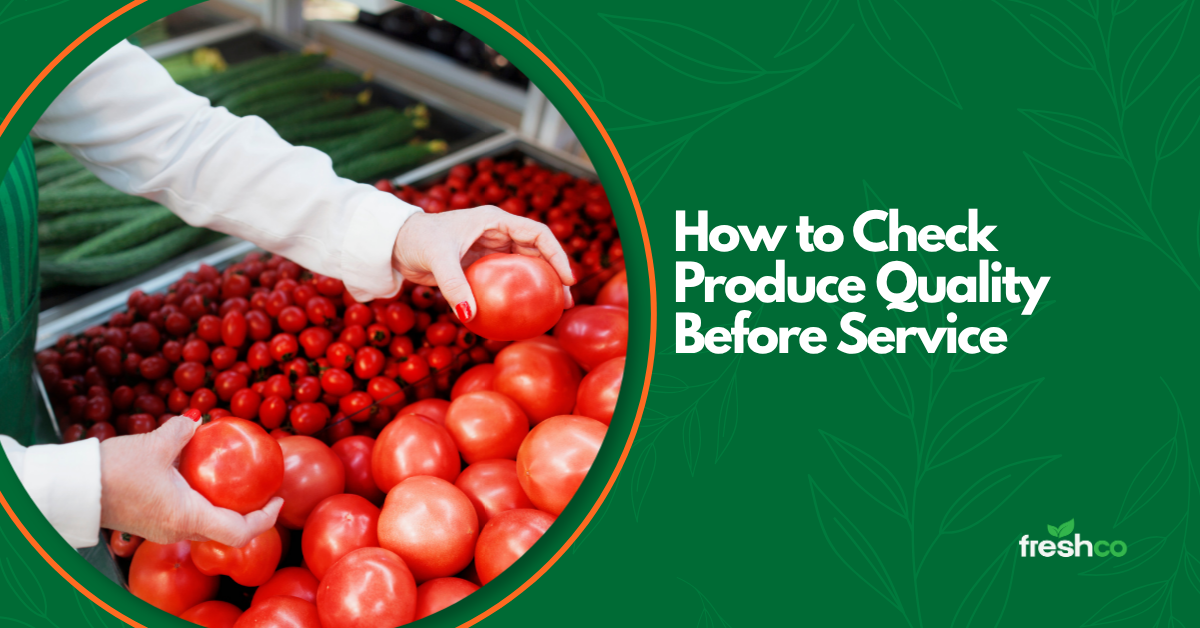
How to Check Produce Quality Before Service
In a busy foodservice kitchen, fresh produce needs to be checked before it reaches prep, plating, or service. A quick quality check can help kitchens reduce waste, avoid last-minute issues, and keep dishes consistent throughout the day.
For restaurants, cafes, pubs, hotels, caterers, hospitals, aged care facilities, and commercial kitchens, checking produce quality is an important part of keeping service organised and reliable.
1. Check produce as soon as it arrives
The best time to check produce is when it arrives at the kitchen.
Look over the order before storing it away. This helps the team identify anything that needs to be used quickly, stored carefully, or separated from other stock.
A quick arrival check can include:
- Checking freshness and overall appearance
- Looking for bruising, wilting, or soft spots
- Confirming the order matches what was needed
- Separating delicate produce from heavier items
- Prioritising items that should be used first
This helps the kitchen start with a clearer picture of what is ready for service.
2. Look at colour, texture, and firmness
Fresh produce should look and feel suitable for its intended use.
Leafy greens should look crisp and fresh, not yellowing or overly wilted. Herbs should be fragrant and bright, not slimy or dried out. Fruit and vegetables should feel appropriate for their use, whether firm, ripe, or ready to prepare.
Texture matters because it affects prep, cooking, and plating. A tomato for slicing, for example, may need a different level of firmness compared to one used for sauces.
3. Store delicate items properly
Some produce needs extra care once it enters the kitchen.
Leafy greens, herbs, berries, mushrooms, and soft fruit can lose quality faster if they are handled roughly or stored with too much moisture. These items should be kept cool, dry where appropriate, and protected from heavy produce that may damage them.
Good storage helps preserve freshness and reduces the chance of spoilage before service.
4. Rotate stock before starting prep
Before beginning prep, check what stock needs to be used first.
Using older stock before newer stock helps reduce waste and keeps produce moving through the kitchen properly. This is especially important for high-volume kitchens where fresh items are ordered regularly.
A simple stock rotation routine can help the team avoid forgetting produce at the back of the cool room.
5. Match quality to the dish
Not every piece of produce needs to be used in the same way.
Produce that is very fresh and visually clean may be best for salads, garnishes, fresh platters, or visible plating. Items that are still usable but slightly less perfect may be better suited for soups, sauces, roasting, stocks, cooked dishes, or prep where appearance is less important.
This approach can help kitchens make better use of stock while maintaining dish quality.
6. Keep communication clear
If something does not look right, it should be communicated early.
Kitchen teams should have a clear process for reporting produce issues, whether that means informing the chef, updating the ordering team, or contacting the supplier. The earlier a quality concern is raised, the easier it is to manage before service begins.
Clear communication helps prevent small issues from becoming service problems.
Freshco’s note
Checking produce quality before service helps kitchens stay prepared, reduce waste, and maintain consistency across the menu. With the right handling, storage, and stock rotation, fresh produce can support smoother prep and better service.
Freshco supplies quality fruit and vegetables to restaurants, cafes, pubs, hotels, clubs, caterers, hospitals, aged care facilities, and commercial kitchens across Sydney.