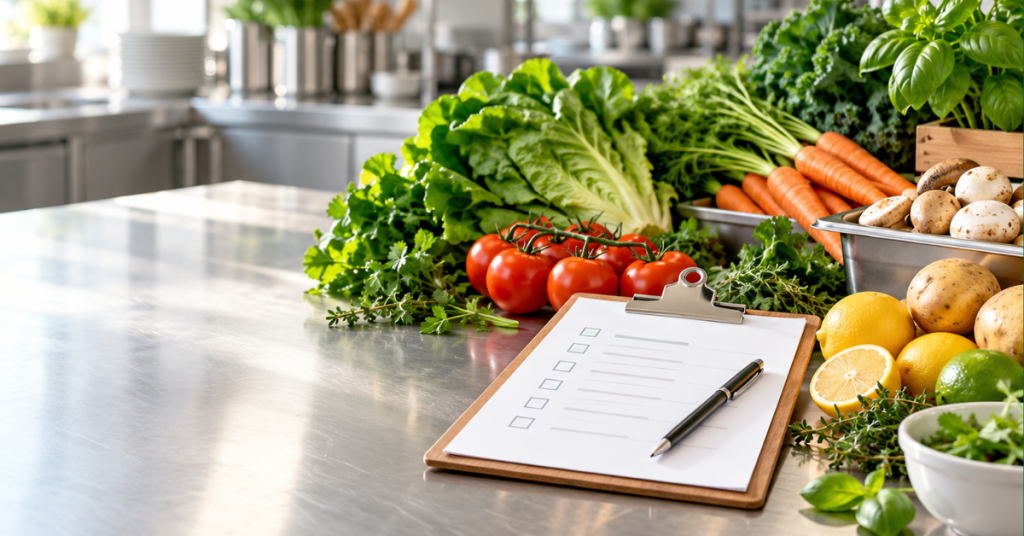
Produce Ordering Checklist: 6 Steps for a Smoother Kitchen Week
A clear produce ordering checklist can help foodservice teams avoid last-minute shortages, reduce waste, and keep prep more organised throughout the week. In a busy kitchen, ordering fresh fruit and vegetables is not just about replacing what has run out. It is about planning around service, storage, menu needs, and stock rotation.
For restaurants, cafes, pubs, hotels, caterers, hospitals, aged care facilities, and commercial kitchens, a simple ordering routine can make the week easier to manage.
1. Check what is already in stock
Before placing a new order, start with a quick stock check.
Look through the cool room, dry storage, prep areas, and any produce already set aside for service. This helps the team avoid doubling up on items that are still available.
Check for:
- Produce that needs to be used first
- Items that are running low
- Ingredients that are no longer suitable for service
- Stock that can be moved into cooked dishes, sauces, soups, or specials
This first step helps make the rest of the order more accurate.
2. Review the week’s menu needs
A produce order should match what the kitchen actually plans to serve.
Check regular menu items, specials, functions, catering orders, and any expected changes in service volume. If a dish relies heavily on a specific ingredient, make sure that item is included early in the order plan.
This is especially useful for high-use items such as leafy greens, tomatoes, potatoes, herbs, mushrooms, citrus, onions, carrots, and salad vegetables.
3. Think about shelf life
Not all produce lasts the same amount of time.
Delicate produce such as herbs, leafy greens, berries, mushrooms, and soft fruit should be ordered and handled carefully. Hardier items such as potatoes, onions, pumpkins, carrots, and citrus may hold longer when stored properly.
A good produce ordering checklist should consider which items need to be used early and which items can support the kitchen later in the week.
4. Match quality to the right use
Different dishes need different levels of produce quality and presentation.
The best-looking produce may be needed for salads, fresh plating, garnishes, fruit displays, or visible menu items. Produce that is still usable but less visually perfect may work better in soups, sauces, roasting, bakes, or cooked preparations.
Thinking about use before ordering helps the kitchen get better value from each delivery.
5. Communicate any special requirements
If the kitchen needs produce for a specific purpose, it helps to be clear.
For example, tomatoes for slicing may need to be firm. Potatoes for roasting may need a suitable size range. Fruit for platters may need strong visual appeal. Herbs for garnishes may need to look fresh and bright.
Clear communication helps reduce confusion and supports better ordering decisions.
6. Build a routine the team can repeat
The best ordering system is one the team can use consistently.
A simple weekly routine can help kitchens stay organised, especially when multiple people are involved in ordering, receiving, storing, and preparing produce.
This routine can include:
- Checking stock before ordering
- Reviewing menu needs
- Prioritising delicate items
- Rotating older stock first
- Labelling where needed
- Reviewing waste or over-ordering patterns
Over time, this helps the team understand what is being used, what is being wasted, and what needs to be adjusted.
Freshco’s note
A produce ordering checklist can help busy foodservice teams plan better, reduce waste, and keep fresh ingredients ready for service. With clear stock checks, menu planning, storage awareness, and team communication, kitchens can make smarter produce decisions each week.
Freshco supplies quality fruit and vegetables to restaurants, cafes, pubs, hotels, clubs, caterers, hospitals, aged care facilities, and commercial kitchens across Sydney.