
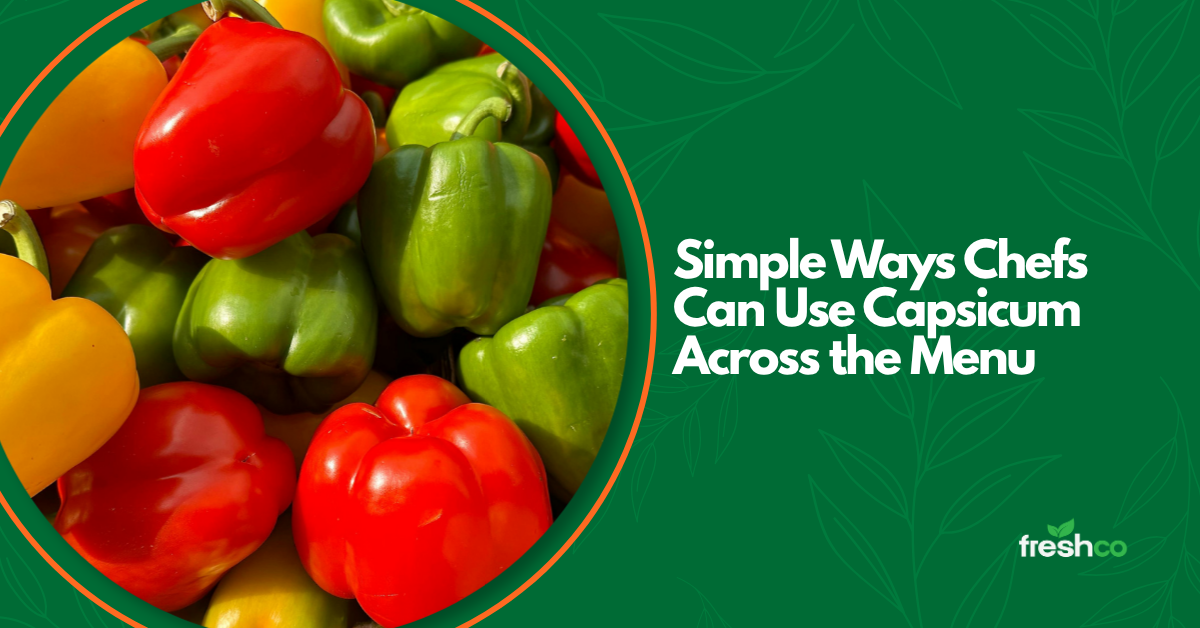
Simple Ways Chefs Can Use Capsicum Across the Menu
Capsicum is a useful ingredient for busy kitchens because it brings colour, sweetness, crunch, and flexibility to a wide range of dishes. It can be served raw, grilled, roasted, stuffed, sautéed, or folded into cooked menu items.
For chefs and foodservice teams, capsicum is especially practical because it works across breakfast, lunch, dinner, salads, sides, shared plates, vegetarian dishes, and cooked mains.
1. Use capsicum fresh in salads and cold dishes
Fresh capsicum adds crunch, colour, and natural sweetness to salads and cold menu items.
It can be sliced into strips, diced finely, or cut into larger pieces depending on the dish. Red, yellow, and green capsicum can also help make salads look brighter and more generous on the plate.
Capsicum works well with cucumber, tomato, onion, leafy greens, herbs, citrus dressing, feta, olives, grains, and grilled proteins.
2. Roast it for deeper flavour
Roasted capsicum brings a softer texture and a richer, sweeter flavour.
It can be used in warm salads, pasta, grain bowls, sandwiches, antipasto plates, or as a side dish. Roasted capsicum also pairs well with garlic, herbs, olive oil, balsamic, chilli, eggplant, zucchini, mushrooms, and soft cheese.
For foodservice kitchens, roasted capsicum can be prepared ahead and used across multiple menu items.
3. Add it to breakfast and brunch dishes
Capsicum is a good fit for cafes and breakfast menus.
It can be added to omelettes, scrambled eggs, breakfast wraps, fritters, savoury muffins, hash, or breakfast bowls. Its colour helps brighten the plate, while its mild sweetness works well with eggs, herbs, tomato, spinach, mushrooms, corn, and avocado.
This makes it a flexible ingredient for venues that need produce to work across different service periods.
4. Use it in sauces, pastas, and cooked mains
Capsicum can support cooked dishes without overpowering the rest of the ingredients.
It can be sautéed into sauces, added to pasta, used in stir-fries, folded into rice dishes, or cooked into vegetable-based mains. Roasted capsicum can also be blended into sauces, dips, or spreads for extra colour and flavour.
It works especially well with tomato, onion, garlic, basil, parsley, paprika, chilli, chicken, beef, seafood, legumes, and grains.
5. Build colour into shared plates and sides
Capsicum is useful when a dish needs more colour and visual appeal.
Grilled or roasted capsicum can be served as part of shared plates, vegetable sides, antipasto boards, or warm seasonal dishes. It can also be used in skewers, vegetable medleys, and platter-style service.
For chefs, capsicum is a simple way to make a plate feel brighter without adding too much complexity.
6. Handle and store it properly
Capsicum should be stored cold and handled carefully to avoid bruising, soft spots, or moisture damage.
In a commercial kitchen, keep capsicum dry, cool, and away from heavy produce that may damage the skin. Check firmness before prep, especially when capsicum will be served raw or used for visible plating.
Good storage helps keep capsicum crisp, bright, and ready for service.
Freshco’s note
Capsicum is a practical ingredient for foodservice menus because it can support fresh, grilled, roasted, and cooked dishes. From salads and breakfast plates to mains, sides, and shared plates, it gives chefs plenty of flexibility across the menu.
Freshco supplies quality fruit and vegetables to restaurants, cafes, pubs, hotels, clubs, caterers, hospitals, aged care facilities, and commercial kitchens across Sydney.
