
Broccoli Beyond the Side Dish: Getting More From Every Bunch
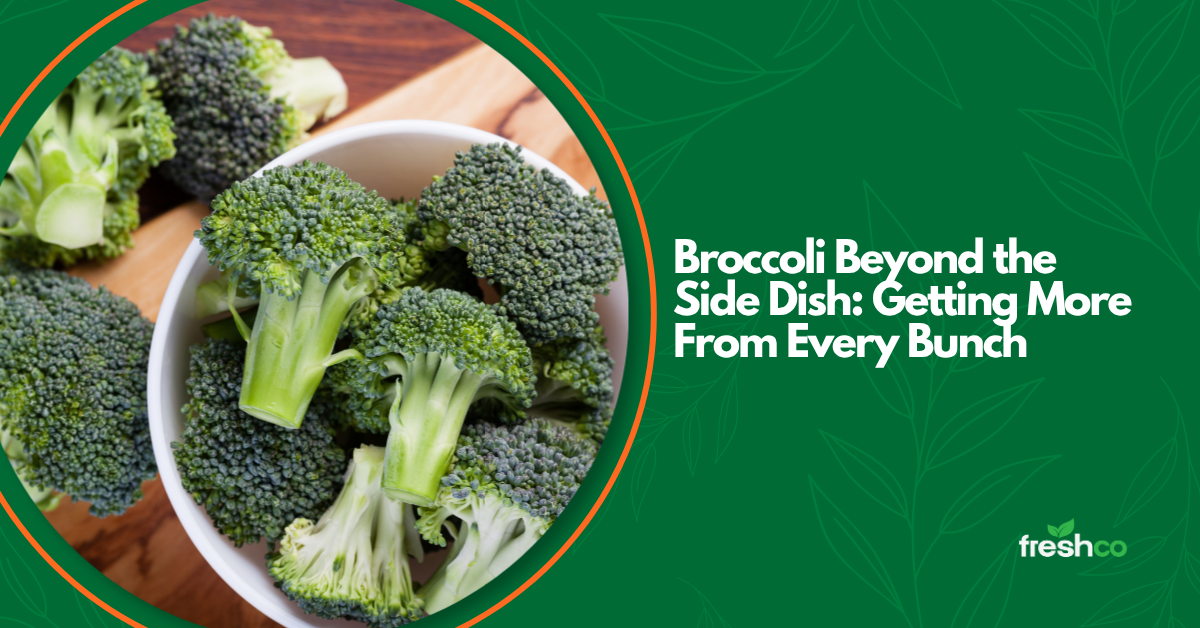
Broccoli is often treated as a simple vegetable side, but in a busy kitchen, it can do more than sit beside a main. With the right prep and menu planning, broccoli can support multiple sections of the menu while helping kitchens make better use of each order.
For foodservice teams, the value of broccoli comes from its flexibility. The florets, stems, texture, and colour can all be used in different ways depending on the dish, service style, and prep schedule.
More than steamed greens
Steamed broccoli has its place, especially for simple sides and lighter plates. But chefs can also bring out more flavour by roasting, charring, sautéing, or blanching it before finishing it with stronger ingredients.
A quick char can give broccoli a deeper flavour. A short blanch can keep it bright and crisp. Roasting can make it feel heartier and more suited to shared plates, bowls, or warm salads.
The method depends on what the dish needs: freshness, crunch, depth, or colour.
Use texture as part of the dish
Broccoli works well when texture is considered from the start.
Larger florets can give a dish more structure, while smaller florets can be folded into pasta, rice dishes, grain bowls, or vegetable mixes. Finely chopped broccoli can also be used in fritters, fillings, soups, sauces, or savoury bakes.
This makes it useful for kitchens that need one ingredient to work across different menu items without creating extra complexity.
Don’t forget the stems
Broccoli stems are often overlooked, but they can still be useful when prepared properly.
Once peeled or trimmed, the stems can be sliced, diced, roasted, sautéed, blended into soups, or added to stir-fries and vegetable mixes. Using more of the vegetable can help reduce waste and improve value from each order.
For commercial kitchens, this is especially helpful when preparing larger volumes.
Build flavour around it
Broccoli can take on a wide range of flavours, which makes it easy to adapt across different menus.
It works well with lemon, garlic, chilli, parmesan, butter, sesame, tahini, yoghurt dressing, toasted nuts, breadcrumbs, herbs, and olive oil. For heartier dishes, it can be paired with pasta, grains, eggs, mushrooms, chicken, seafood, or legumes.
The key is to choose a flavour direction that matches the rest of the plate. Broccoli can feel fresh and light, or richer and more savoury, depending on how it is prepared.
Make it work across service
One of broccoli’s strengths is that it can support different service periods.
For breakfast, it can be added to omelettes, fritters, baked eggs, or breakfast bowls. For lunch, it can work in salads, grain bowls, pasta, or warm vegetable sides. For dinner, it can be roasted, grilled, added to mains, or served as part of a shared plate.
This gives kitchens more flexibility when planning produce use across the week.
Keep prep practical
Broccoli is best handled with a clear prep plan.
Separate florets by size depending on how they will be used, keep stems for suitable cooked dishes, and store prepared broccoli carefully to maintain freshness. If broccoli is being used for visible plating, keep the best-looking florets aside for those dishes.
A simple prep system helps the kitchen move faster while making better use of the produce.
Freshco’s note
Broccoli may be familiar, but it is still a useful ingredient for chefs who want flexibility across the menu. With thoughtful prep, careful storage, and smart use of both florets and stems, foodservice teams can get more value from every bunch.
Freshco supplies quality fruit and vegetables to restaurants, cafes, pubs, hotels, clubs, caterers, hospitals, aged care facilities, and commercial kitchens across Sydney.