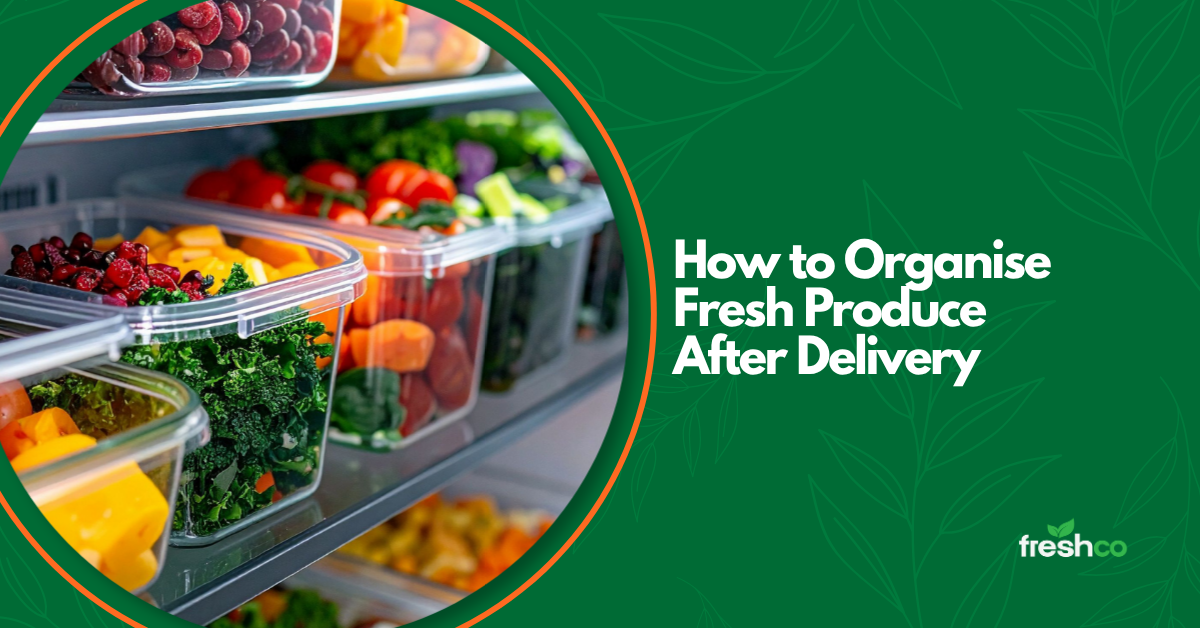
How to Organise Fresh Produce After Delivery
Fresh produce delivery is only the first step. Once fruit and vegetables arrive at the kitchen, how they are checked, sorted, stored, and rotated can affect freshness, prep flow, and service quality.
For restaurants, cafes, pubs, hotels, caterers, hospitals, aged care facilities, and commercial kitchens, a clear produce handling routine can help reduce waste and keep ingredients ready for busy service periods.
1. Check the order before storing it away
Before produce is moved into storage, take a few minutes to check the order.
Confirm that the items match what was ordered and look over the produce for any obvious issues such as bruising, wilting, soft spots, damaged packaging, or incorrect quantities.
Checking produce early helps the kitchen identify what needs to be used first, what needs extra care, and whether anything needs to be raised with the supplier.
2. Separate delicate produce from heavier items
Not all produce should be handled the same way.
Delicate items such as herbs, leafy greens, berries, mushrooms, tomatoes, and soft fruit should be separated from heavier produce to avoid crushing or bruising. Heavier items such as potatoes, onions, pumpkins, and large root vegetables should be stored in a way that does not damage lighter stock.
This simple step can help protect freshness and reduce unnecessary waste.
3. Prioritise cold storage items
Some produce needs to be moved into cold storage quickly to maintain quality.
Leafy greens, herbs, berries, mushrooms, and many fresh vegetables can lose freshness faster if left sitting in warm areas for too long. After checking the delivery, make sure cold storage items are moved promptly and organised properly.
Keeping produce at the right temperature helps preserve texture, colour, and usability.
4. Rotate older stock forward
Fresh deliveries should not automatically be placed in front of older stock.
Before putting new items away, check what is already in the cool room or storage area. Move older usable stock forward so it is used first, and place newer stock behind it where appropriate.
This helps prevent older produce from being forgotten and supports better stock rotation across the kitchen.
5. Label and group produce clearly
A tidy storage area makes service easier.
Group similar items together and make sure the team can quickly see what is available. Labelling delivery dates or organising stock by use priority can also help chefs and kitchen staff know what should be used first.
Clear organisation saves time during prep and reduces confusion during busy periods.
6. Keep storage areas clean and uncrowded
Overcrowded storage can damage produce and make stock harder to manage.
Avoid stacking fragile items too tightly or placing heavy boxes on top of delicate produce. Make sure there is enough space for airflow where needed, and keep storage areas clean to protect produce quality.
A well-organised cool room or storage area helps the kitchen work faster and more efficiently.
7. Communicate any changes to the team
Once produce has been checked and stored, it helps to update the team.
Let chefs or kitchen staff know if certain items need to be used first, if stock levels are different from expected, or if there are ingredients that should be prioritised for prep or specials.
Good communication helps the whole kitchen make better use of fresh produce.
Freshco’s note
Organising fresh produce properly after delivery helps foodservice teams protect quality, reduce waste, and prepare for smoother service. With simple checks, careful storage, and clear rotation, kitchens can get more value from every produce order.
Freshco supplies quality fruit and vegetables to restaurants, cafes, pubs, hotels, clubs, caterers, hospitals, aged care facilities, and commercial kitchens across Sydney.